In short: Bangkok clubbing began in hotel discotheques in the 1970s, moved into big independent clubs such as The Palace and NASA in the 1980s, and found an underground in Silom Soi 4 and Patpong in the 1990s. Q Bar and Bed Supperclub made international DJs routine after 1999. Early closing times from 2001 shaped the scene for two decades until the 4am trial began in December 2023.
Bangkok has a reputation as one of Asia’s great party cities, but its clubs have rarely lasted. Venues open, burn bright for a few years and close because of rent, trends, regulation or, in the worst cases, tragedy. This history follows Bangkok clubbing decade by decade, drawing mostly on the people who were there. It is part of an independent guide that started with the story of Q Bar, one of the clubs that changed the city.
Hotel discotheques of the 1970s and 1980s
A discotheque is a venue where recorded music is played for dancing, usually by a DJ. In Bangkok the first fashionable ones were inside hotels. Writing in BK Magazine’s 2013 history of clubbing, author Pahd Pasiigon remembered Diana at The Oriental, The Bubble at the Dusit Thani and The Flamingo at The Ambassador at the turn of the 1980s. Guests had to dress up to get in, live bands and DJs took turns, and Diana was probably the first venue in Thailand to use laser lights.
Then came The Palace on Vibhavadi Rangsit in the early 1980s, when, in Pahd’s words, clubs “became independent of the hospitality business.” NASA in Ratchada took its design from the space race: a huge hangar with smoke machines and flashing lights that could hold about 4,000 people a night.
The 1990s: Silom Soi 4, Patpong and Sukhumvit
The 1990s gave Bangkok its first rave culture. BK’s contributors place it on Silom Soi 4, where Rome Club drew crowds every night of the week and Deeper was “one of the first clubs for underground raves”. Lucifer’s on Patpong opened in 1998 as one of the first clubs to play techno trance and stay open until 5am. On Sukhumvit, Narcissus on Soi 23 was known for Roman-style architecture and top sound systems, and Taurus on Soi 26 combined a jazz band, a restaurant and a club room. A bottle of whisky there cost 3,000 baht.
The city was also learning where to find things. Philip Cornwel-Smith recalls in Koktail Magazine that the listings magazine Bangkok Metro launched in August 1994 and listed more than 1,000 events and places a month.
Why did Bangkok clubs close early in the 2000s?
In 2001 Interior Minister Purachai Piemsomboon began a “social order” campaign that enforced old licensing laws. Bars had to serve last drinks at 1am, according to an AFP report from September 2001, and the minister led raids in which customers were given on-the-spot urine tests. Bar managers said takings had halved. Cornwel-Smith writes that the policy tried to concentrate nightlife in Silom, Ratchada and RCA, with early closing times that were unprofitable.
Raids continued for years. In 2004 the Associated Press described police locking nearly 400 customers inside Q Bar for drug tests and noted that nightspots outside designated entertainment areas had to close earlier, while under-18s faced a curfew.
Superclubs and the Soi 11 era
Despite the curfew, the 2000s produced Bangkok’s most famous clubs. Ministry of Sound opened on Sukhumvit Soi 12 in 2001 and lasted one year and one month, according to Q Bar’s marketing director Matt Hammond in BK’s history. Q Bar founder David Jacobson told BK that when he arrived “Bangkok only had beer gardens, hotel bars, go-go bars and hiso Thai bars”, and that he set out to build a New York-style club with trained staff and DJs.
Bed Supperclub opened on Soi 11 in 2002 and closed on 31 August 2013. Its creative director, Sanya Souvanna Phouma, told BK the team was “proud of having put Bangkok on the map in terms of clubbing, food and culture.” Elsewhere, Club Culture on Phaya Thai Road ran student nights that, according to the Goodcat collective’s co-founder, helped start the city’s indie scene, while Astra at RCA hosted international DJs. Our guide to Sukhumvit Soi 11 covers that street in depth.
Santika and the end of an era
Santika on Ekkamai was one of the city’s largest venues, able to hold more than 1,000 guests, according to the Bangkok Post. A fire in the first minutes of New Year’s Day 2009 killed 66 people, the figure given in the Wikipedia account of the Santika Club fire. Other reports give different totals, and BK’s 2013 history says 60. The Bangkok Post says the disaster led to changes in fire-safety standards, occupancy rules and licensing for entertainment venues across Thailand. A 24-hour fast-food restaurant now stands on the site.
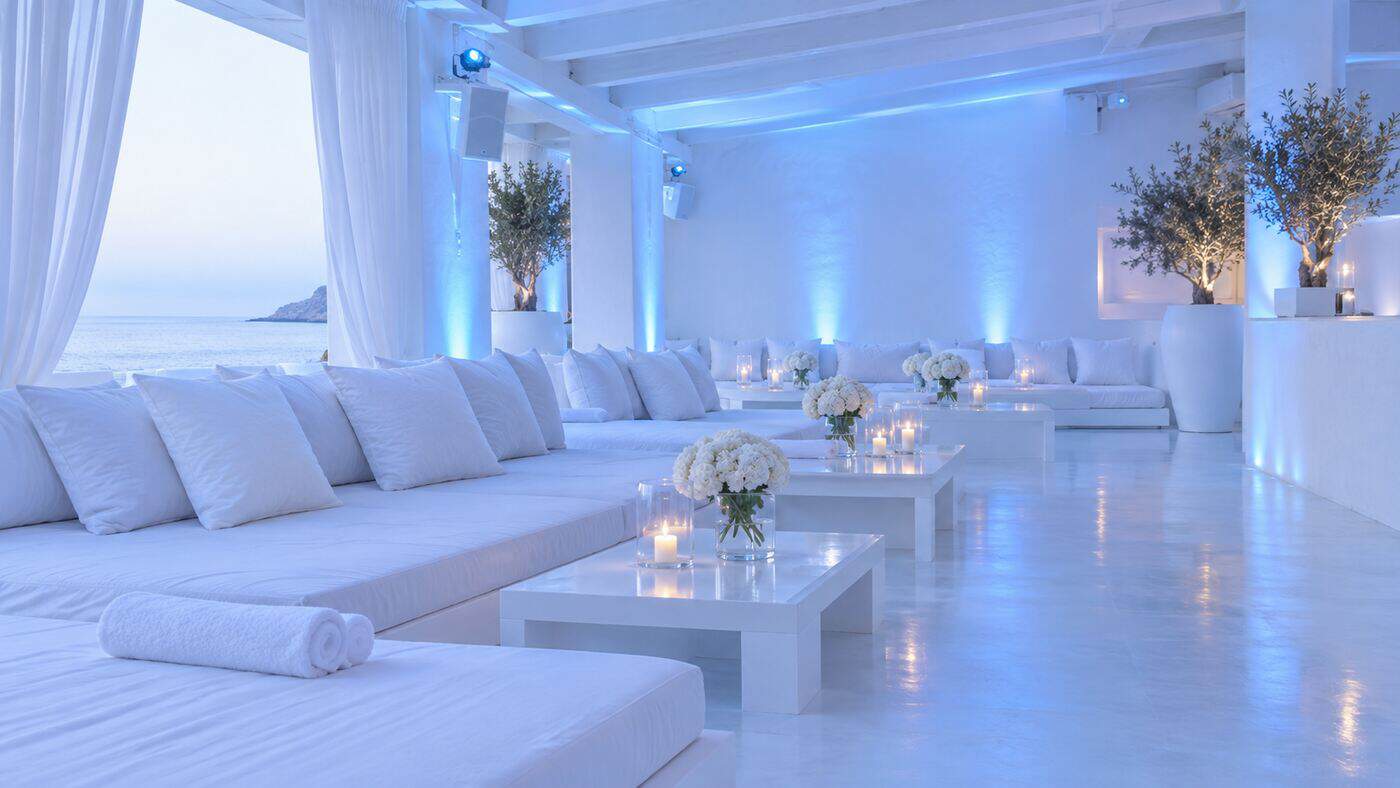
Bangkok clubbing timeline
- Late 1970s to early 1980s: hotel discos such as Diana, The Bubble and The Flamingo.
- Early 1980s: The Palace opens as an independent club.
- August 1994: Bangkok Metro listings magazine launches.
- 1998: Lucifer’s opens on Patpong.
- December 1999: Q Bar opens on Sukhumvit Soi 11.
- 2001: the social order campaign brings 1am last drinks, and Ministry of Sound opens.
- 2002: Bed Supperclub opens.
- 1 January 2009: the Santika fire.
- 31 August 2013: Bed Supperclub closes.
- 15 December 2023: the 4am closing trial begins in four provinces.
From themed bars to the 4am trial
In the 2010s Bangkok’s big nights moved towards designed venues. The Bangkok Post recalls Maggie Choo’s beneath the Novotel Bangkok Fenix Silom, styled by Australian designer Ashley Sutton as 1930s Shanghai, and the Ice Bar at Titanium on Sukhumvit Soi 22, kept at about minus 10 degrees. Bed’s team later held a one-night revival at Sutton’s Sing Sing Theater, which Mixmag Asia loosely called “the second coming of Bed Supperclub.”
The biggest change came in late 2023. A trial allowing licensed venues in designated zones of Bangkok, Chiang Mai, Chon Buri and Phuket to open until 4am began on 15 December, the Bangkok Post reported. Writing in early 2024, Cornwel-Smith noted that the new government had extended closing times to 4am in the old social order zones, with more areas to follow. Our guide to Bangkok nightclub closing times explains the current rules, and our guide to the nightlife districts shows where the zones are.
Key takeaways
- Bangkok clubbing started in hotel discotheques and went independent in the early 1980s.
- Silom Soi 4 and Patpong hosted the first rave and techno clubs in the 1990s.
- The 2001 social order campaign imposed early closing and frequent raids.
- Q Bar and Bed Supperclub made international DJs a regular part of Bangkok nightlife.
- The Santika fire of 2009 changed safety and licensing rules, and the 4am trial of 2023 relaxed closing hours.
Common questions
What was the first nightclub in Bangkok?
No source we found names a single first club. BK Magazine’s history traces the scene to hotel discotheques around the late 1970s, including Diana at The Oriental, which may have been the first venue in Thailand with laser lights. The Palace, in the early 1980s, is described as the start of independent clubs.
Was Ministry of Sound in Bangkok?
Yes. A Ministry of Sound club opened on Sukhumvit Soi 12 in 2001. Q Bar’s marketing director Matt Hammond told BK Magazine it had a huge dance floor and a VIP balcony, hosted DJs such as Paul Oakenfold, and lasted one year and one month before closing.
How many people died in the Santika fire?
Figures vary between sources. The Wikipedia account and the Bangkok Post article text give 66 deaths, a Japanese fire-science report also gives 66, BK Magazine’s 2013 history says 60, and a Bangkok Post photo caption says 59. More than 200 people were injured in the fire on New Year’s Day 2009.
When did Bangkok’s 4am closing start?
The trial began on 15 December 2023 in designated zones of Bangkok, Chiang Mai, Chon Buri and Phuket, according to the Bangkok Post. It applies only to licensed entertainment venues in those zones and to certain hotels, not to every bar in the city.
How we put this together: the decade-by-decade account relies on first-hand recollections collected in BK Magazine’s 2013 history of clubbing, Philip Cornwel-Smith’s 2024 Koktail column and the Bangkok Post’s feature on lost venues. Policy history comes from AFP and Associated Press reports. Where death tolls or dates differ, we give the range and name the sources.
Sources
- BK Magazine: A History of Clubbing in Bangkok, 2013
- Koktail Magazine: 30 Years in Bangkok, Philip Cornwel-Smith, 2024
- Bangkok Post: The night is not so young anymore
- Malaysiakini / AFP: Bangkok nightlife in uproar, 2001
- NBC News / Associated Press: Bangkok club raids, 2004
- Wikipedia: Santika Club fire
- Fire Science and Technology: report on the Santika fire
- Mixmag Asia: Bed Supperclub revival
- Bangkok Post: 4am trial from December 15